

Search behavior is fundamentally shifting. Your prospective clients are no longer just typing keywords into a search bar and scrolling through pages of blue links; they are asking complex questions and receiving fully synthesized, immediate answers.
At PurpleZ, we build digital marketing architectures that adapt to this reality. Adapting your digital presence requires a direct focus on AI search optimization. This guide outlines the mechanics of this shift and provides concrete steps to ensure your business remains the definitive answer when decision-makers ask AI for recommendations.
How does AI search optimization work
AI search optimization works by structuring your website’s information so that large language models (LLMs) and generative search engines (ChatGPT, Gemini. Claude, etc.) can easily comprehend, extract, and cite your answers. Instead of optimizing strictly for keyword volume to rank a link, you optimize for context and entity relationships to become the cited source in a generated conversational response.
The underlying mechanics rely on natural language processing. When a user asks an AI tool a question, the model retrieves the most authoritative, well-structured data available to formulate its answer. To become that data source, your content must provide clear, unambiguous answers. This involves utilizing structured JSON-LD schema markups such as LocalBusiness, FAQPage, and Article schemas, so the bots crawling your site do not have to guess your context. By presenting data logically and answering questions directly, you train the AI to view your brand as a trusted node of information.
How AI search optimization differs from SEO
Traditional SEO aims to secure a high-ranking link on a search engine results page, whereas AI search optimization aims to have your brand’s content directly cited within an AI’s conversational answer.
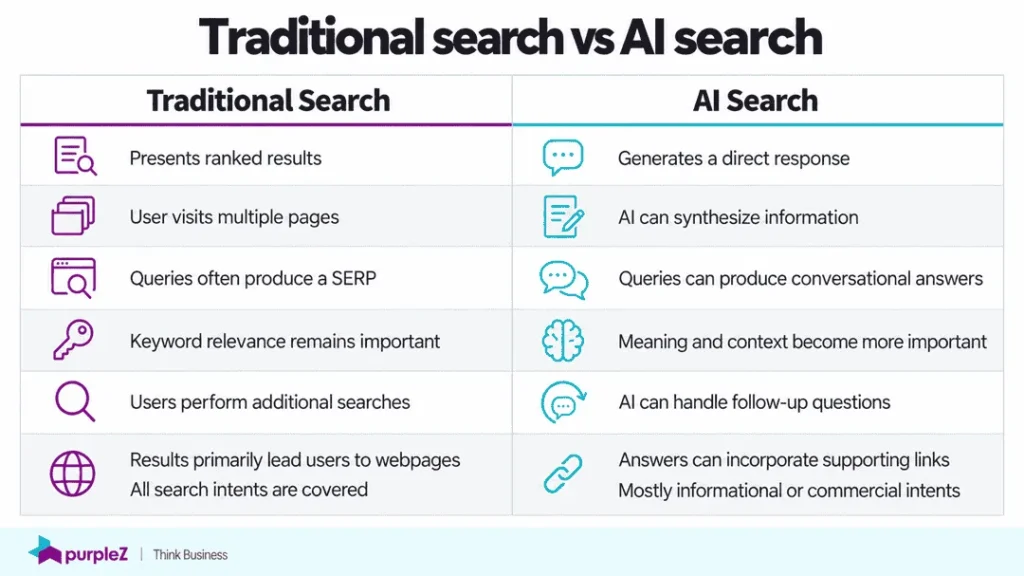
Traditional SEO relies heavily on securing exact-match keywords, analyzing search volumes, and accumulating backlinks to signal domain authority. AI search optimization, conversely, prioritizes direct answerability. A generative model is less interested in how many times a keyword appears and more interested in whether your paragraph clearly and factually resolves the user’s prompt. We often explain to clients that SEO gets you on the map, but optimizing for AI ensures you are the destination the AI recommends.
SEO still matters!
SEO still matters because traditional search algorithms and generative AI models share the same foundational crawling and indexing infrastructure. Before an AI search engine can reference your content, it must be able to crawl your site effectively using standard technical SEO protocols.
AI assistants like ChatGPT, Gemini, and Perplexity use search indexes such as Google, Bing, and Brave to retrieve up-to-date information. Traditional search engines like Google and Bing play a crucial role in helping AI search engines decide which content to mention and cite in their answers.
Or put another way, ranking highly in traditional search will improve your visibility in AI search.
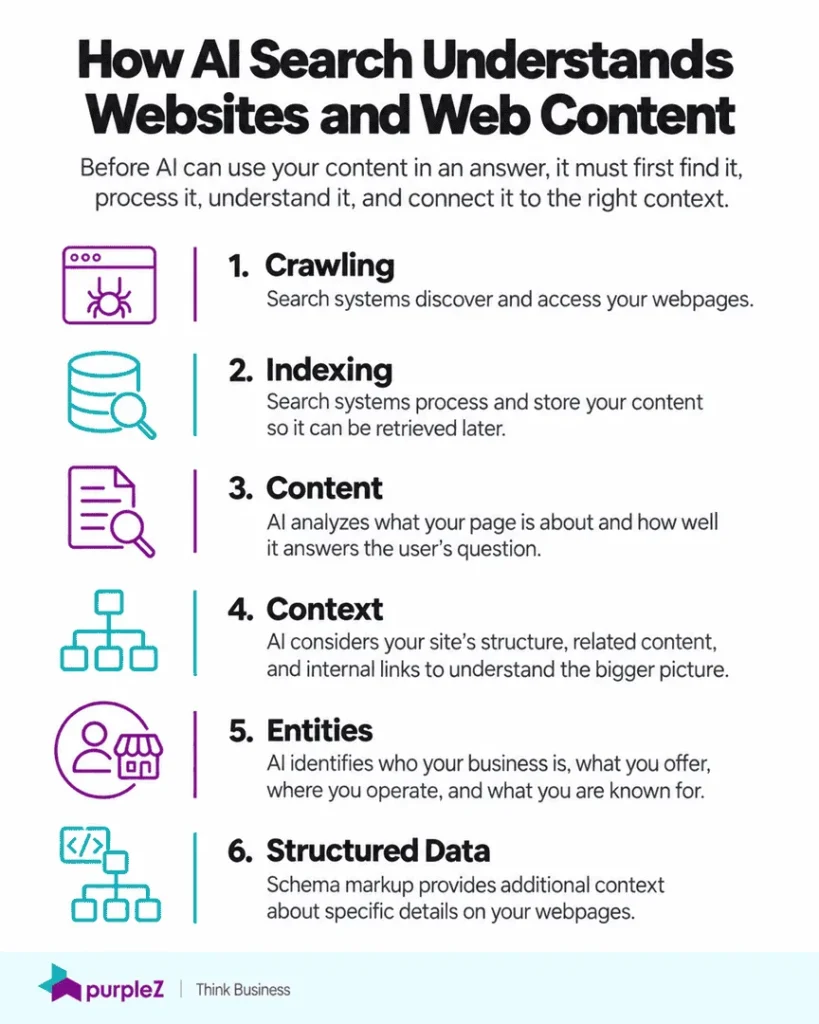
Also, you cannot bypass technical health. Without clean DNS record configurations, manageable sitemap depth hierarchies, and proper server HTTP status troubleshooting, bots simply cannot access your content to train their models. Furthermore, traditional authority signals like high-quality backlinks still function as trust indicators for LLMs. If a major industry publication links to your site, AI models weigh your domain’s credibility higher. Think of foundational SEO as the required infrastructure; AI search optimization is the sophisticated layer built on top of it.
What Makes Content Stand Out in AI Search?
What makes content stand out in AI search is the combination of genuine, experience-based insights and flawless technical data structuring. AI models are saturated with generic, aggregated information. To be cited, your content must offer proprietary perspectives, firsthand agency experience, or unique frameworks that do not exist elsewhere.
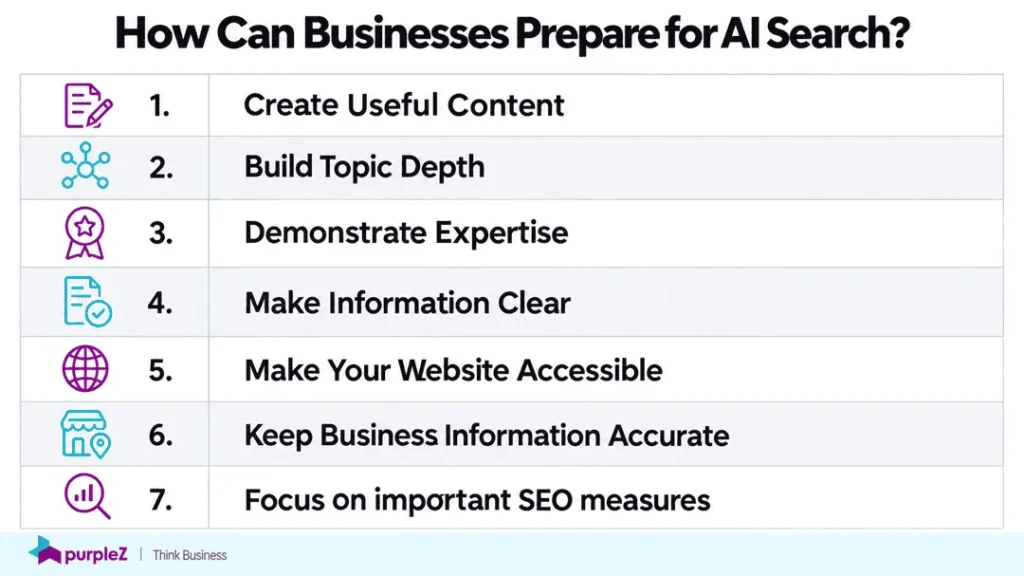
This aligns directly with Google’s E-E-A-T (Experience, Expertise, Authoritativeness, Trustworthiness) guidelines. When we develop client strategies, we look for the specific nuances of their daily operations. Sharing practical details and first-hand experiences signal to the AI that the content is authored by a true practitioner. We then measure the impact of this highly specific content using AI visibility metrics to track how often the brand is referenced in generated responses.
Stop Falling for These AI Search Misconceptions
We constantly audit campaigns where bad advice has derailed a solid strategy. There is a lot of fictional thinking surrounding generative search right now. Here is the reality behind the most common misunderstandings we see:
The “Google is Dead” Fallacy
Generative engines have not eliminated traditional search engines. Instead, we are looking at a hybrid model where AI-generated summaries sit directly above standard organic links. It is an evolution of the user interface, not a total replacement.
The “Keywords Are Obsolete” Trap
Large language models absolutely focus on context and intent rather than exact-match phrases. However, humans still use language to search. You must still optimize for the vocabulary your target market actually uses; you just no longer have to awkwardly stuff those exact phrases into every paragraph.
The “New Rules of SEO” Illusion
You do not have to abandon your current strategy. Generative AI fundamentally relies on standard web crawling. If your site has a broken architecture or terrible server health, no bot is going to find it. The bedrock of traditional technical SEO is exactly what makes AI visibility possible.
The Schema Guarantee
Adding structured data (like JSON-LD) is highly recommended for clarifying your context to algorithms, but it is not a magic wand. It makes your site readable to machines, but it does not force them to quote you. True authority and unique insights are what actually earn the citation.
The “AI Content Wins” Myth
Churning out mass-produced, machine-written pages will not trick the algorithm. Platforms demand real substance and proven expertise (E-E-A-T). Lazy, generic content fails, regardless of whether a human or a script generated it.
The Visibility Mix-Up
Earning a mention in an AI overview does not mean your standard organic link will suddenly sit at the top of the SERP. These are parallel tracks with different evaluation criteria. You can win the AI citation without dominating the classic search page.
AI search optimization types
AI search optimization types generally fall into three practical categories for SMBs: Answer Engine Optimization (AEO), Generative Engine Optimization (GEO), and conversational chatbot optimization. Each targets a slightly different mechanism of AI-driven search.
- Answer Engine Optimization (AEO): This focuses on structuring content to secure featured snippets, voice search answers, and direct query responses. It requires concise, formatting-heavy content (like lists and tables).
- Generative Engine Optimization (GEO): This targets visibility within search features like Google’s AI Overviews. It requires comprehensive topic coverage, high authority, and deep semantic relevance.
- Chatbot Optimization: This ensures your brand entity is accurately understood by standalone LLMs (like ChatGPT or Claude) so that when a user asks for agency recommendations, your business is accurately described and suggested.
Why should you start AI optimization?
You should start AI search optimization now because the window to establish foundational authority in generative models is currently open, and early adopters will secure the primary citations. Consumer behavior is already defaulting to AI for fast, synthesized decision-making, bypassing traditional search entirely.
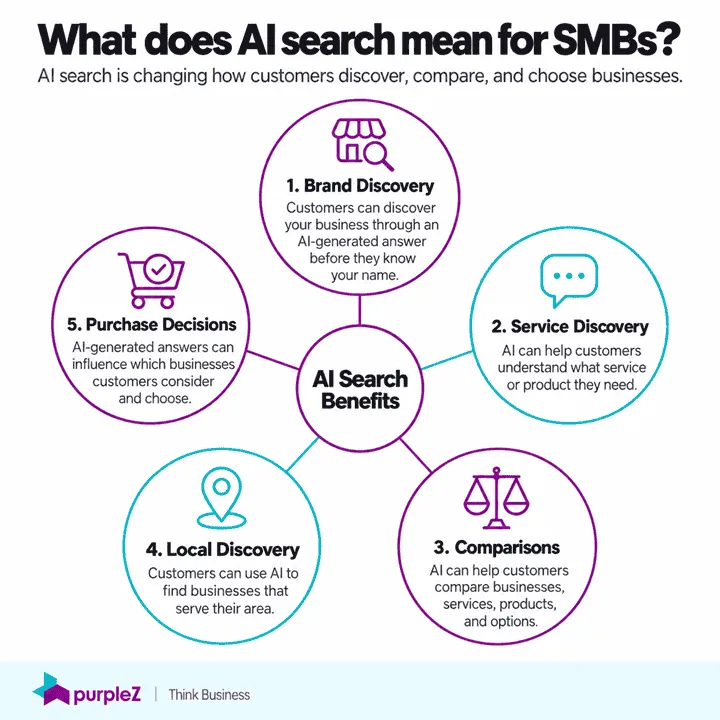
For businesses looking to outsource their marketing, establishing trust is paramount. As a dedicated AI search optimization agency, we integrate these tactics early because waiting until organic traffic drops is a costly mistake. Implementing tracking through GA4 key events and GTM click triggers allows us to measure user engagement on AI-optimized pages, proving that these strategies attract highly qualified leads who have already received a positive brand recommendation from their AI assistant.
AI search engine optimization strategies
Effective AI search engine optimization strategies involve optimizing for direct answers, implementing robust schema markup, and establishing strong digital PR to build brand entity recognition. You must format your web pages to serve both the human reader and the AI data scraper.
First, audit your site’s structure. If you review any standard Google or Microsoft LLM guide, you will notice a consistent emphasis on clarity. Ensure that every major heading on your site is followed immediately by a concise, authoritative answer.
Second, deploy advanced JSON-LD schema. Do not rely on automated plugins alone; customize your markup to define your exact business type, services, and geographic relevance.
Finally, for those seeking localized dominance, such as AI search optimization services in California, ensure your digital footprint is consistent across local directories, client reviews, and localized content, reinforcing your entity’s physical and operational reality to the AI.
Frequently Asked Questions
How long does AI search optimization take to show results?
AI search optimization has no universal results timeline. Progress depends on existing discoverability, the changes required, source updates, and the platforms being monitored.
Does AI search optimization replace traditional keyword research?
No, AI search optimization does not replace traditional keyword research; it evolves it. It usually takes the minimum of six months to get discovered and mentioned by AI.
How do I measure the success of AI optimization?
You measure AI optimization success by tracking referral traffic from AI engines, monitoring brand mentions in generative search results, and utilizing tools like Semrush to track AI visibility metrics alongside custom GA4 key events.
Should I still invest in SEO for my business?
Yes, investing in foundational SEO remains absolutely essential. Traditional technical SEO like clean site architecture, crawlability, and authoritative content is the infrastructure that makes AI visibility possible. If search engine bots cannot easily access and understand your website, neither traditional algorithms nor modern generative AI models will recommend your business.